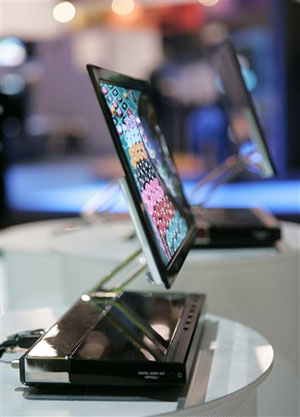
Sony TV with novel display technology that has drawn rave reviews for image quality may actually last little more than half as long as the company claims, according to a test by a private research firm.
Sony's XEL-1 is the first TV on the U.S. market that uses organic light-emitting diodes, which give a bright, colorful image while keeping power consumption low. The screen diagonal is just 11 inches, making it more of a conversation piece than the center of the living room, especially considering the price _ $2,499.99.
DisplaySearch ran two XEL-1 units for 1,000 hours, and measured the drop in brightness. Extrapolating from that, they found it would take 17,000 hours for a display to lose half its brightness, a standard measure of display life.
Sony says the display lasts 30,000 hours, or 10 years of typical use. Spokesman Greg Belloni said that figure is based on years of tests and the company stands by it.
Poor longevity has been a problem with OLEDs, but Barry Young, senior adviser at DisplaySearch, said it has more or less been solved in the most recent iterations of the technology.
''The results demonstrate that the Sony display is significantly inferior in many ways to the current (OLED) designs,'' DisplaySearch's researchers wrote.
For example, Young said, Samsung makes a smaller OLED display for cell phones that lasts longer than Sony's TV.