

The 10 Worst AI Mistakes You Can Make
By Ben Lee | 10 Jun, 2026
Avoid these mistakes to ensure AI becomes a tool that leverages your strengths rather than a crutch that amplifies your worst tendencies.
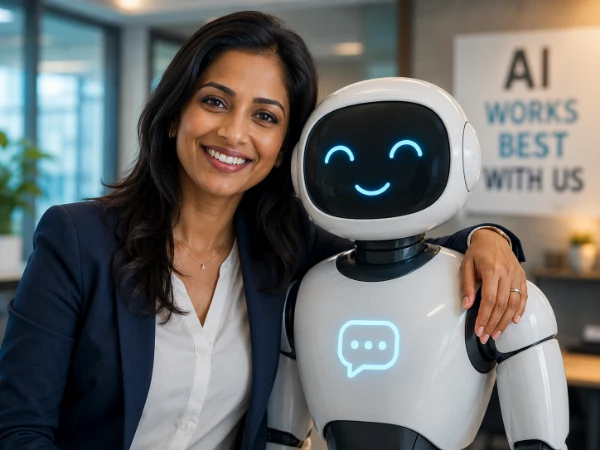
Just a year ago using artificial intelligence was seen as an experimental activity reserved for software engineers, data scientists, and science-fiction enthusiasts. Today it's as commonplace as using a search engine or sending an email.
That's generally a good thing. Used well, AI can dramatically boost productivity, accelerate learning, sharpen creativity, and help ordinary people perform at levels that once required teams of specialists. But there's a caveat: used badly, AI can send you down the path to becoming less capable, less informed, less creative, and, ultimately, less employable.
AI disasters don't come from the technology itself. They come from the habits users develop around it. Here are some of the biggest mistakes people make with AI—and how to avoid them.
1. Trusting AI More Than Yourself
One of the easiest traps of the AI era is to assume that because something sounds intelligent, it must be correct.
AI systems are astonishingly fluent and articulate. They can write confidently about almost anything. Unfortunately, confidence and accuracy aren't the same thing. AI can misinterpret facts, invent sources, make arithmetic mistakes, confuse timelines, and occasionally produce complete nonsense wrapped in polished prose.
The danger is that AI can present mistakes wrapped in plausible prose, inducing users to stop thinking critically. Intelligent users treats AI the way they would treat an extremely bright but occasionally unreliable assistant. They verify important facts, challenge assumptions, and ask follow-up questions.
If AI ever replaces your judgment, you're using it wrong.
2. Substituting AI for Learning
Perhaps the most insidiously damaging mistake is using AI as a substitute for thinking.
For example, if you're trying to learn a new programming language you can ask AI to explain concepts, create exercises, identify errors, and accelerate your learning. Or you can ask AI to write every line of code while you mindlessly copy and paste. Both approaches use AI, but one results in actual growth.
The same principle applies to writing, mathematics, research, business strategy, language learning, and virtually every intellectual activity.
AI should reduce friction but not eliminate effort. If you start using AI to do all your thinking, you're training yourself for irrelevance.
3. Accepting the First Answer
Many users treat AI like a vending machine. Insert prompt—receive answer. That's usually a mistake. The real power of AI emerges through conversation and iteration. Experienced users know that the first answer is often merely a starting point. They follow up by requesting alternative viewpoints, and challenging conclusions. They refine prompts to seek deeper analysis or push for clarification.
The quality of AI output often improves dramatically after three or four rounds of interaction. People who stop after the first response frequently get mediocre results and may even conclude AI isn't very useful. Treating AI as a one-shot tool is like hiring a brilliant consultant and ending the meeting after thirty seconds.
4. Using AI to Confirm Your Biases
Human beings have always been skilled at finding evidence that supports what they already believe. AI can make that tendency worse. Because AI is conversational, users can subtly guide it toward desired conclusions. If you're determined to prove a point, it's surprisingly easy to frame prompts that generate supportive arguments. The result is an intellectual echo chamber. Instead of expanding your thinking, AI used in that way becomes a machine for validating your existing opinions.
A better approach is to deliberately ask for opposing viewpoints. Ask AI to critique your position. Ask it to identify weaknesses in your assumptions. Ask what evidence would prove you wrong. Growth happens when your ideas are challenged, not when they're constantly reinforced.
5. Letting AI Replace Creativity
One of AI's big dreads is found among artists, writers, designers, and entrepreneurs fretting that it will destroy creativity.
In fact, creativity suffers most when people voluntarily surrender it. AI can generate endless ideas, but that's a far cry from sharing an original vision.
Some users fall into a pattern where every project begins and ends with whatever AI suggests first. Over time their work starts sounding generic because it originates from the same statistical patterns everyone else is using.
The most successful creators use AI to brainstorm, explore alternatives, uncover blind spots, and accelerate execution. But the central vision remains their own. Creativity isn't disappearing. It's becoming more valuable. The people who stand out will be those who combine human originality with AI assistance rather than replacing one with the other.
6. Ignoring Privacy and Security
Countless problems have arisen from users pasting confidential information directly into AI systems without thinking twice. They upload contracts, financial records, customer data, medical information, proprietary business plans, internal company documents, and even personal correspondence, not understanding the risks they're creating.
The convenience of AI can create a false sense of safety. Before sharing sensitive information, understand exactly what platform you're using, what data policies apply, and whether the information should be disclosed at all. Follow this simple rule: If you wouldn't post it on a public bulletin board, think carefully before entering it into an AI system.
7. Using Poor Prompts
A surprising number of users blame AI for outcomes that are actually prompt failures. Consider these two requests:
"Tell me about climate change."
Versus:
"Explain the three most significant economic impacts of climate change on coastal cities over the next twenty years. Include counterarguments and areas of uncertainty."
The second prompt is far more likely to produce useful results.
AI responds to specificity, and it's up to you to clue AI into everything that matters: context, objectives, constraints, audience, etc.
The clearer and more focused your instructions, the better your results. Designing prompts is rapidly becoming a valuable professional skill. Often the quality of the prompt matters more than the sophistication of the model.
8. Failing to Verify Important Information
AI is extraordinarily useful for exploration but isn't meant to be used as a source of instant truth. Decisions involving money, health, legal issues, safety, contracts, taxes, employment, or other high-stakes matters require independent verification.
AI as a highly capable research assistant, not a final authority.
Many people have already learned this lesson the hard way after relying on fabricated citations, incorrect legal precedents, or inaccurate financial information. The higher the stakes, the more verification you need. That's not an AI limitation, simply good judgment.
9. Letting AI Do All the Thinking
Years of relying on a GPS system to take you everywhere may result in forgetting how to navigate familiar roads.
AI can become so handy that users gradually stop exercising important mental skills. Memory weakens. Research abilities decline. Writing skills erode. Problem-solving muscles atrophy.
This doesn't happen overnight and is too gradual to set off alarm bells at any point.
The solution isn't avoiding AI but to periodically work without it. Occasionally write from scratch. Solve some problems manually. Research topics independently. Challenge yourself. Technology should extend your abilities, not replace them. The goal is augmentation, not dependency.
10. Forgetting That AI Reflects You
The overriding truth is that AI magnifies the qualities of its user. A curious person becomes more curious. A disciplined person becomes more productive. A creative person becomes more inventive. A lazy person becomes lazier. A biased person becomes more biased. An irresponsible person becomes more irresponsible.
AI isn't a replacement for character. It's an amplifier that can dramatically increase your capabilities, but it can't determine your goals, values, or priorities. Those will always remain your sole responsibility.
The Bottom Line
The biggest mistake people make with AI isn't using it too much but using it thoughtlessly. Like every transformative technology before it, AI rewards people who approach it deliberately and punishes those who surrender their judgment.
Use AI to learn faster, not avoid learning. Use it to sharpen thinking, not replace thinking. Use it to expand creativity, not forsake it. Use it to amplify your strengths and learn how to reveal and address your weaknesses, not cover them up.
The future won't belong to people who compete against AI nor to those who blindly obey it. It belongs to people who learn how to collaborate with it while remaining unmistakably, intelligently human.
© 2026 by Asian Media Group Inc.
Recent Articles
- 'I Love the Inflation,' Trump Says of Prices Rising Amid Iran War
- China's JUNO Neutrino Detector Advances Precision in Mass-Ordering Quest
- Only 11% of Europeans View US as Ally, Survey Shows
- BYD Will Be World's Biggest Automaker in 5 Years Says Its Chairman
- US Consumer Prices Increase at Fastest Pace in 3 Years
- Traders Keep Bets on Fed Rate Hike by October
- Drone Risks Keep World Cup Security Planners Frantic
- Bill Gates to Face Congress in Probe of Epstein Case Handling
- Musk’s xAI, SpaceX Hit with Class Action over Data Center ‘Nuisance’
- Downed Chopper Prompts US to Launch New Strikes on Iran