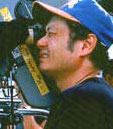
 Ang Lee: Tone Poet or Hitmeister?
Ang Lee: Tone Poet or Hitmeister?
 hose who know Ang Lee as the Oscar-nominated director of Crouching Tiger, Hidden Dragon (2000), which won an Oscar for Best Foreign Language Film, are surprised to learn that he had built a golden reputation on fussed-over social satires of gay life (The Wedding Banquet, 1993), food and family life (Eat Drink Man Woman, 1994), Victorian love (Sense and Sensibility, 1996), Watergate-era suburban mores (The Ice Storm, 1997), and a Civil War drama (Ride with the Devil, 1999).
A resume like that might damn Lee as an artiste who lucked into a box office hit. Hardly. He and writing partner James Schamus adapted CTHD from a segment of a Chinese pulp serial novel, the kind read by the pimply nose-pickers who also buy lots of movie tickets. Lee wanted Jet Li in the lead in hopes of tapping the kung-fu craze. Li said no, forcing Lee to settle for Chow Yun-Fat, scale back the fight scenes, add some romance and brace for arthouse hell.
Any doubt about Ang Lee's blockbuster aspirations will disappear by the summer of 2003 when Universal releases his next directorial gig -- a big-bucks adaptation of the Hulk, a Marvel Comics hero with emotional and dermatological issues. The big green guy should make Lee a big green guy as well. Whether Lee's status as a tone poet will survive the adventure will depend on how much shading he can pile on the movie without burying its kiddie appeal. And this time he won't have the appeal of the kung-fu genre to provide covering fire.
Ang Lee was born in Taiwan in 1954. His father was the principal of his highly-ranked high school and wasn't happy when Ang failed the college boards and decided to go to Taipei to study theater and cinema at the Academy of Arts. He graduated in 1976. By 1978 he was married to a medical researcher willing to support him while he earned a B.A. in drama at the University of Illinois. He then went to NYU to earn a masters in film directing. For the next six years he became a househusband awaiting a filmmaking break. He failed to get hired or financed but did become a first-rate chef and an excellent housekeeper. Seeing a $26 balance on the family checking account one day compelled Lee to change his tack. Drawing on his personal experiences during those bleak years, he wrote two screenplays and submitted them to a Taiwanese government-sponsored screenwriting competition. His entries took first and second prizes.
Fortified with $16,000 in prize money and about $400,000 in financing, Lee made Pushing Hands, the story of an ageing taoist master withering in New York. It was good enough to be screened at the 1992 Berlin Film Festival but failed to find distribution outside Taiwan. His second-prize screenplay, The Wedding Banquet, translated into a film that won both critical acclaim and international arthouse success. It made Lee's reputation as a director, winning him financing for Eat Drink Man Woman and a surprise offer from Emma Thompson to direct her adaptation of Sense and Sensibility. That was in 1994, the same year Lee and Schamus began sketching the kung-fu flick that would evolve, six years later, into Crouching Tiger, Hidden Dragon.
Is Ang Lee a tone poet with enormous range or a major hitmeister in the making?
WHAT YOU SAY
[This page is closed to new input. Vote and continue this and related discussions at the new Interactive Area. --Ed.]| Until Crouching Tiger Hidden Dragon, I never even heard of Ang Lee. That movie made him pretty famous to the people who enjoyed the film. His main mistakes in that movie were the fantasy flying and the philisophical convoluted plot which seems to be based on historical fact...it isnt. |