

GoldSea Streamers Guide to DISNEY+
By J. J. Ghosh | 12 May, 2026
Part 4 of our series assessing how streaming platforms are doing by us.
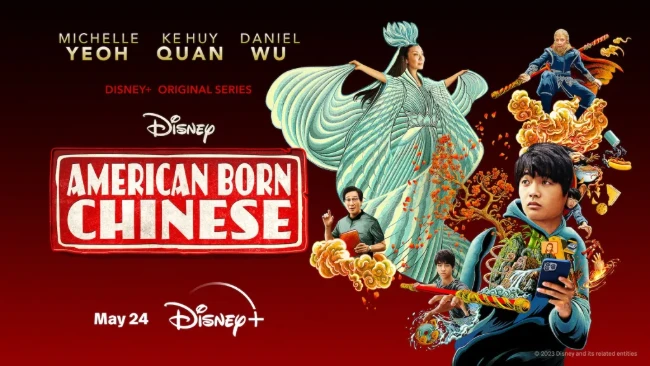
American Born Chinese (2023): A genre-hopping coming-of-age story that weaves Chinese mythology into a thoroughly contemporary Asian American high school experience
Disney+ technically launched in 2019. But take away the plus sign and we’re talking about a 103-year-old entertainment company that has long been established as one of the most well-known in the world.
Suffice it to say, you probably formed an opinion on Disney well before reading this.
Maybe you’re a die-hard Disney adult who has loved their content since you were a kid. You might be a Florida conservative who swore off the company when they entered a public feud with Governor Ron DeSantis. Or maybe you just like Star Wars and couldn’t care less about any of the other stuff.
You may be aware that Disney has a complex history when it comes to representation, and all of that is worth at least considering in issuing them a grade.
But let’s start in the present.
How are they doing by the AAPI community?
The Content List
Chang Can Dunk (2003): A Chinese American high school basketball player bets his rival he can dunk by end of season.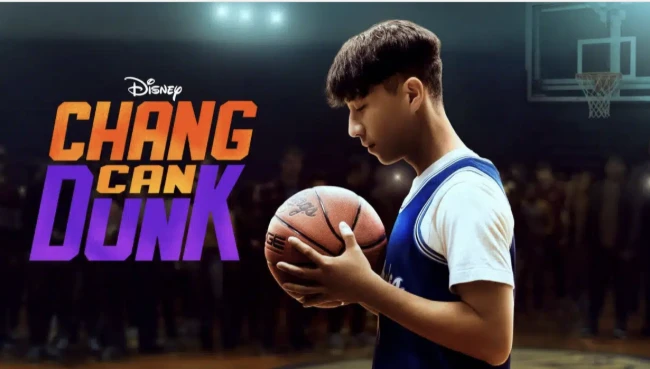
Disney+ has a dedicated AAPI content collection called “Asian and Pacific Islander Stories,” which they spotlight each May for AAPI Heritage Month.
The hub is organized around themed collections — cultural roots, family bonds, identity — and includes a mix of Disney originals, Marvel content, and licensed titles. It is a reasonable starting point for AAPI viewers and meaningfully better organized than nothing.
The caveat, as with Apple TV+ and HBO Max, is that the hub leans on animated classics and Marvel properties to pad its numbers. Mulan is in there. Moana is in there. Shang-Chi is in there. These are not nothing — but counting them toward a diversity metric is doing some significant work.
Here’s what’s actually worth watching:
Series:
Mulan (1998) was celebrated for its representation while also criticized for getting some things wrong.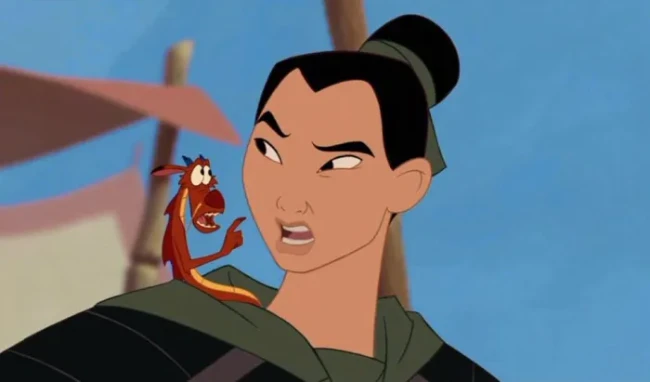
American Born Chinese (2023) — The crown jewel of Disney+’s AAPI original output. Based on Gene Luen Yang’s graphic novel, created by Kelvin Yu, directed by Destin Daniel Cretton (Shang-Chi), and starring Michelle Yeoh and Ke Huy Quan fresh off their Everything Everywhere All at Once moment. A genre-hopping coming-of-age story that weaves Chinese mythology into a thoroughly contemporary Asian American high school experience. It is funny, imaginative, and culturally specific in ways that Disney content rarely achieves. It has not yet been renewed for a second season, which is its own kind of statement.
Ms. Marvel (2022) — Kamala Khan is Marvel’s first Muslim superhero lead, a Pakistani American teenager from Jersey City navigating superpowers, family, and identity. The show was made with significant Pakistani creative involvement and takes its South Asian setting seriously. It is also the first Marvel series to center a South Asian character, which took until 2022.
Doogie Kamealoha, M.D. (2021–2023) — A reimagining of Doogie Howser, M.D. set in Hawaii, centered on a half-Filipino, half-white teenage medical prodigy. It ran for two seasons and is one of the few Disney properties to take Pacific Islander identity seriously rather than using it as backdrop.
Gannibal (2022, Season 2 2025) — The Japanese horror series about a cop in a remote village with dark secrets. One of the best international horror series currently streaming anywhere.
Movies:
Chang Can Dunk (2023) — A Chinese American high school basketball player bets his rival he can dunk by end of season. Directed by Jingyi Shao in an assured debut, starring Bloom Li. Modest in scope, genuine in execution. The kind of movie Disney should make more of.
Shang-Chi and the Legend of the Ten Rings (2021) — Marvel’s first Asian-led superhero film, directed by Destin Daniel Cretton, starring Simu Liu and Tony Leung. Imperfect but genuinely exciting, and the Tony Leung casting alone deserves an award.
Moana (2016) and Moana 2 (2024) — Disney’s most sustained attempt at Pacific Islander representation. Made with significant input from a Pacific Islander cultural board and starring Dwayne Johnson and Auliʻi Cravalho. A live-action remake is due later this year.
Raya and the Last Dragon (2021) — Southeast Asian-inspired animated film with a Southeast Asian-heavy cast. Thoughtful in intent, uneven in execution.
The Historical Baggage
Now that we’ve established what’s there, let’s talk about how Disney got here — because the road was long and not always pretty.
Mulan is the obvious starting point. The 1998 animated film remains one of the most emotionally resonant pieces of AAPI-adjacent content Disney has ever produced, and also one of the most studied examples of what happens when a predominantly white creative team adapts an ancient Chinese folk tale for a Western audience.
The “Reflection” sequence is genuinely beautiful. The rest is more complicated.
The film conflated Asian cultures in ways that made Chinese viewers wince — a Japanese flag appearing on a Chinese character’s hospital tent, a story rooted in filial piety that pivots into American individualism, Mushu voiced by Eddie Murphy as a comedic device that reads very differently to Asian viewers than to white ones.
The 2020 live-action remake tried to correct some of this and introduced new problems — filming in Xinjiang, thanking the Chinese government in the credits during a period of mass detention of Uyghur Muslims. It was an attempt at cultural authenticity that managed to alienate both Chinese viewers and Western ones simultaneously.
But as with the original animated version, the mere attempt is something to celebrate. Rather than a blank slate, it gives us a starting point to build from.
Lady and the Tramp had the Siamese cats. The Aristocats had a caricatured Asian cat playing piano with chopsticks. Big Hero 6 was set in a fictional “San Fransokyo.” Raya and the Last Dragon blended Southeast Asian cultures into a generic pan-Asian setting that felt simultaneously respectful in intent and flattening in execution.
The through-line in all of this is a company that understood Asia was a source of compelling stories and a massive market, but that for most of its history lacked either the will or the infrastructure to tell those stories with the specificity and care they deserved.
When Disney reached for Asian representation, it tended to reach for a composite version of Asia — the elements most legible to Western audiences, stripped of the particulars that would have made them genuinely authentic.
None of this disqualifies the recent work. In fact, it might even be cause to further appreciate how far they’ve come.
The Honest Assessment
Disney+ gets a B+.
On one hand, it’s produced more explicitly AAPI-centered original content than almost any other platform — American Born Chinese, Ms. Marvel, Chang Can Dunk, Doogie Kamealoha, Shang-Chi. That is a real body of work, and it represents a genuine shift from a company whose historical relationship with Asian representation ranged from problematic to actively harmful.
On the other hand, Disney’s sheer scale means its failures hit harder and reach further than anyone else’s.
In other words, they’re being graded on a curve.
When Disney gets Asia wrong — and the record shows it has gotten it wrong repeatedly, across decades — it does so in front of hundreds of millions of people, many of them children forming their first impressions of what Asian culture looks like. Those images lodge somewhere.
American Born Chinese is the counterpoint — a piece of original content that’s allowed to be small, weird, funny, and culturally specific without needing to feed into anything larger. It’s the show that suggests what Disney is capable of when it’s not trying to build a franchise around it. The fact that it hasn’t been renewed for a second season is the most frustrating data point in Disney+’s AAPI record.
Their best content is genuinely excellent and represents real creative investment in AAPI storytelling.
At the same time, we’re holding them to a particularly high standard given their ability to make literally whatever they want.
Next up: Paramount+
© 2026 by Asian Media Group Inc.
We’re holding them to a particularly high standard given their ability to make literally whatever they want.
Recent Articles
- Anthropic Allowed to Release Mythos AI Model to 'Tusted' US Organizations
- Apple Seeks Approval to Buy from Blacklisted Chinese Company to Ease Memory Crunch
- China's Industrial Profits Stay Resilient on Factories, Exports
- Meet the Teen Who Undertook a 7-Continent Solo Flight Against Cancer
- Getting Fit Pt. 2 - Raising Our Floor
- South Korea Survives World Cup Scare, Advances to Round of 32
- SpaceX Targets US Consumers with Starlink Mobile Service Push
- Former First Lady Kim Keon Hee Gets 7-Year Jail Term for Bribery
- Iran Reasserts Right to Control Hormuz Passage After Ship Hit Near Oman
- Trump's Cutoff of Clean Energy Tax Credit Drives Rush of New Projects Before Costs Soar