

Surge Biswas's Nabla Bio Inks Deal with Takeda Pharmaceutical
By Reuters | 14 Oct, 2025
The Japanese pharmaceutical giant will provide capital for the US biotech firm to develop protein-based therapeutics on its proprietary Joint Atomic Model AI platform.
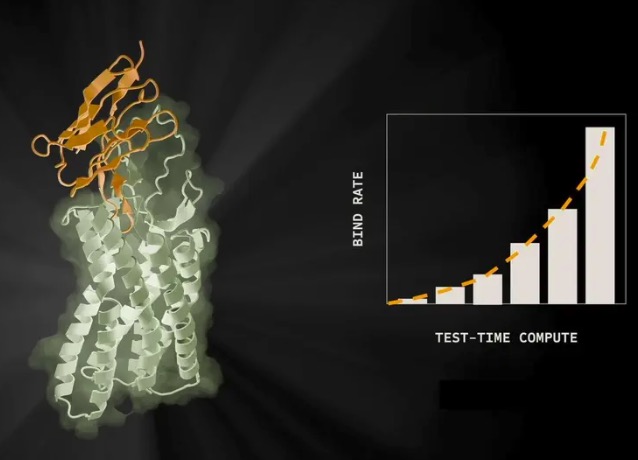
A diagrem depicting Nabla Bio's Test-Time Scaling technique for de novo antibody design. (Nabla Bio Image)
U.S. biotech firm Nabla Bio said on Tuesday it has signed a second major research partnership with Japanese drugmaker Takeda Pharmaceutical, deepening their use of artificial intelligence to accelerate drug discovery.
Under the new multi-year agreement, which builds on an earlier collaboration launched in 2022, Nabla will receive upfront and research cost payments in double-digit millions. The company is also eligible for success-based payments worth more than $1 billion.
The move underscores growing momentum across the pharmaceutical industry to harness AI in drug development, with hopes of significantly reducing timelines and costs in the coming years.
Nabla said it would use its proprietary AI platform, Joint Atomic Model (JAM), to design protein-based therapeutics for Takeda's early-stage pipeline. The companies will focus on hard-to-treat diseases and include multi-specific drugs and other custom biologics.
Comparing to how ChatGPT answers text questions, Nabla CEO Surge Biswas said JAM responds to molecular queries by designing antibodies from scratch that bind targets with desired properties.
The company claims to maintain "probably the fastest feedback loop in the industry", with a turnaround of three to four weeks from design to lab testing.
"We are basically working on whatever the most pressing problems in Takeda's discovery portfolio is at any given time, and using JAM to help unlock and unblock those" Biswas told Reuters.
The latest deal comes weeks after Takeda said it would exit cell therapy research to focus on faster and more scalable drug types.
Earlier this month, Takeda joined a consortium, including Bristol Myers Squibb, to train AI models using shared data.
Nabla expects first-in-human data from its AI-designed molecules within one to two years.
(Reporting by Kamal Choudhury in Bengaluru; Editing by Shilpi Majumdar)
Recent Articles
- Honda Posts First Annual Loss on Cost of Scrapping EV Push
- Foxconn Beats with 19% Jump in Q1 Profit on AI Demand
- Xi Lauds 'New Positioning' in Ties with US
- AI Boom Puts SK Hynix on Cusp of $1 Trillion Market Value
- Iran Letting Chinese Ships Transit Strait of Hormuz
- EV Startup Xpeng in Talks to Buy Volkswagen's European Factory
- Ford Stock Surges on Investor Optimism over New Energy Storage Business
- Microsoft Shopping for AI Startups for Life After OpenAI
- Cisco to Cut About 4,000 Jobs in AI-Focused Restructuring as Big Orders Surge
- Lu Jianwang Found Guilty of Operating Secret Police Station on China's Behalf