

India's Nascent Luxury Car Market Begins Growth Surge
By wchung | 15 Jun, 2026
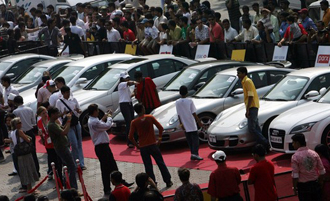
A supercar show draws a big crowd in Mumbai, one of India's top two luxury car markets.
India’s luxury car market surged 40% over 2010 to hit $1.4 billion in 2011, outstripping growth in jewelry and electronics. But even at that blistering pace it will take about two decades to reach the size of the luxury auto market in China or the US.
India’s flashy young heirs and nouveaux riches are starting to create an order backlog for exotic cars like Aston Martin, Ferrari, Maserati and even a few $900,000 Lamborghini Aventador LP 700-4s, but German makes BMW, Mercedes-Benz and Audi have cornered most of India’s luxury car market so far.
Still, top-selling BMW sold only 7,079 vehicles while second-place Mercedes sold 6,670 for the year ending March 31, 2011. Both brands are likely to cross the 10,000 mark in 2012, but their sales are only about 4% of the 440,000 sold in China during the same period. By comparison, the two makes sold about 520,000 vehicles in the US during 2011, excluding the Mini and the Smart Car.
The limiting factor remains the relatively small number of Indians who have attained even middle-class status by western standards. Currently only about 10 million of India’s 1.25 billion belong to households with annual incomes of over $36,000. That number will swell to around 50 million by 2015 if it continues to grow at its current average annual growth rate of about 8.2%.
Much of the newly affluent will emerge in cities outside Dalhi and Mumbai where BMW currently sells 70% of its cars. Over the next four years the company plans to open most of its 36 new showrooms in smaller cities. In 2010 Mercedes-Benz received orders for 150 cars from the city of Aurangabad in the heart of the remote western state of Maharashtra where the average family lives on about $2.00 a day.
The luxury car boom is likely to get a boost once the government begins lowering its punitive 110% tariff on imported luxury goods. Also, more local production will lower the total actual cost by about a third since tax on domestically-made models are only 40%. That gives Land Rover and Jaguar — both owned by India’s Tata Motors — a big price advantage in India over its German rivals.
© 2026 by Asian Media Group Inc.
Recent Articles
- California Congressman Dave Min Presses Trump on “Pay-To-Play” Pardons
- China's Heavy Truck Electrification to Hit Diesel Demand
- Trump Push into Highly Dangerous Plutonium Unlikely to Fix US Nuclear Fuel Crunch
- India's May Wholesale Price Inflation Rose to 9.68% on Fuel-Cost Surge
- Tesla Presented Misleading ‘Full Self-Driving’ Safety Data to European Regulators
- Deal Includes Release of $25 Billion in Frozen Assets, US-Funded Reconstruction
- Fox Strikes $22 Billion Deal for Roku to Aid Streaming Shift
- Nvidia to Raise $20 Billion in First Corporate Bond Sale in Five Years
- Israel Remains Wild Card As Iran, US Seek Peace
- US Homebuilder Sentiment Falls in June Amid Rising Costs