

Resynchronizing Implant Better at Preventing Heart Attacks
By wchung | 19 Jun, 2026
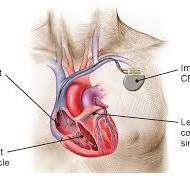
Boston Scientific said Tuesday a clinical study shows its heart resynchronization implant devices were better at preventing death or surgery due to heart failure than another popular type of device.
The Natick, Mass., company said patients implanted with the devices, which recoordinate the action of the right and left ventricles, were 29 percent less likely to die or need surgery than patients who had implantable cardioverter defibrillators.
ICDs are designed to restore a normal heart rhythm by delivering an electric shock.
Boston Scientific said the results show that early implantation of a cardiac resynchronization device can slow the progression of heart failure. The MADIT-CRT trial included more than 1,800 patients with class I or II heart failure, the two mildest types according to a New York Heart Association scale.
The company said about 70 percent of all U.S. heart failure patients have the class I or class II type. It estimated that 5.5 million people in the U.S. have heart failure.
In premarket trading, shares of Boston Scientific advanced 74 cents, or 8 percent, to $9.98.
6/23/2009 9:09 AM NEW YORK (AP)
© 2026 by Asian Media Group Inc.
Recent Articles
- Qantas Bets on Sleep and Light Science to Sell 20-Hour Flights
- High-Wire Diplomacy Delivered US-Iran Deal but the Tricky Part's to Come
- Pentagon Asks for $80 Billion for Iran War Bills
- Ukrainian Drone Makers Zero in on Demand Created by Taiwan Tensions
- Bedtime Story: Tenali Raman and the Thieves
- Fujimori Edges Toward Peruvian Presidency as Sanchez Calls for Protests
- Republicans Blast Trump's Iran Agreement as Details Emerge
- SK Hynix Veteran Seok-Hee Lee Tapped to Lead Intel Foundry Packaging Push
- Mamdani Plans to Air World Cup for Free Throughout New York
- Myra Molloy Parlays Historic Broadway Success into a Leading Film Role