

S. Korea Asked to Move Patriot Missile Batteries to Support US Offensive
By Reuters | 06 Mar, 2026
As Trump's offensive continues apace, the US is running short of defensive missiles to protect the dozens of US bases, ports and diplomatic compounds across the Middle East from Iran's vast arsenal of drones and missiles.
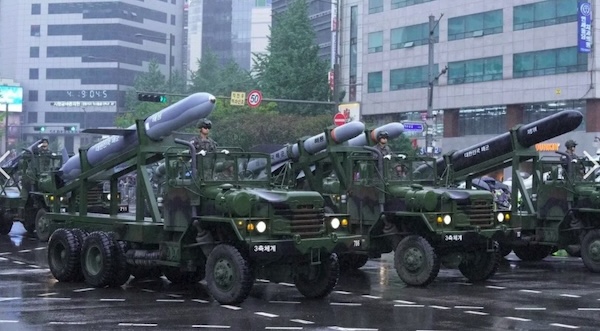
Various missiles being paraded in downtown Seoul. (Reuters Photo)
South Korean Foreign Minister Cho Hyun said on Friday the U.S. and South Korean militaries are discussing the possible redeployment of some U.S. Patriot missile defence systems based in South Korea to be used in the war against Iran.
Cho was responding to questions at a parliamentary hearing following media reports on Friday that units of the U.S. mobile missile interceptor system had been moved to the Osan Air Base in South Korea from other locations in the country.
Cho said he was unable to comment when asked whether theU.S. plan is to move the Patriot missiles soon to use in theconflict against Iran. He said Seoul has not received any requests fromWashington for military help.
U.S. President Donald Trump has said he would take any assistance from any country on Iran.
U.S. Forces Korea said: "For operational securityreasons, we do not comment on the movement, relocation, orpotential repositioning of specific military capabilities orassets."
Media reports citing South Korean government sources said the Patriot systems were being readied for redeployment in the Middle East, with heavy U.S. military transport planes having flown into Osan to move them.
U.S. and Israeli forces have been striking strategic targets inside Iran for the seventh day under a campaign that Trump said was aimed at crippling Iran's nuclear weapons and ballistic missile capabilities.
South Korea hosts a major U.S. military presence incombined defence against nuclear-armed North Korea, with about28,500 troops and surface-to-air defence systems, including thePatriot missile interceptors.
(Reporting by Jack Kim, Heejin KimEditing by Ed Davies)
© 2026 by Asian Media Group Inc.
Recent Articles
- The Making of a Striking Tiger
- Japan's World Cup Prospects Brighter Than Their Single Group Point Might Suggest
- International Stars in the Red Devils' Lineup Suggests a Deep World Cup Run for S. Korea
- Italy's Meloni Says Trump 'Totally Invented' Story That She Begged Him for Photo
- Lebanon Ceasefire Agreed After US-Iran Talks in Switzerland Scrapped
- Qantas Bets on Sleep and Light Science to Sell 20-Hour Flights
- High-Wire Diplomacy Delivered US-Iran Deal but the Tricky Part's to Come
- Pentagon Asks for $80 Billion for Iran War Bills
- Ukrainian Drone Makers Zero in on Demand Created by Taiwan Tensions
- Bedtime Story: Tenali Raman and the Thieves