

Honda's Helm.ai Challenges Tesla's Camera-Based FSD
By Reuters | 19 Jun, 2025
A camera-based auto control system that interprets the urban environment to allow advance planning poses a direct challenge to the cameras-only system used by Tesla in quest for full self-driving.
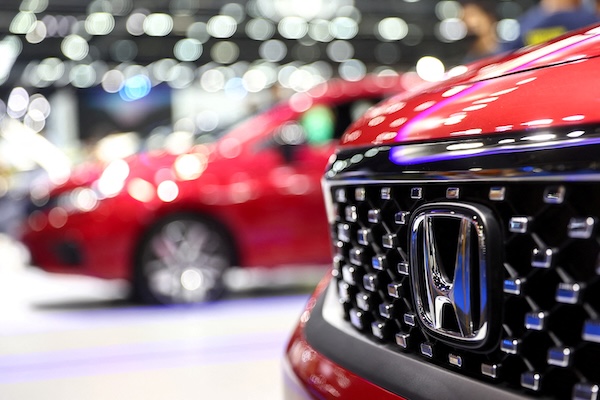
The Honda logo is displayed at the 44th Bangkok International Motor Show in Bangkok, Thailand, March 23, 2023. REUTERS/Athit Perawongmetha
Honda Motor-backed Helm.ai on Thursday unveiled its camera-based system to interpret urban environments, dubbed Helm.ai Vision, and said it was in talks with other automakers to deploy its self-driving technology in mass-market vehicles.
Helm.ai is working with the Japanese automaker to integrate its technology in the upcoming 2026 Honda Zero series of electric vehicles, which will allow users to drive hands-free and take their eyes off the road.
"We're definitely in talks with many OEMs and we're on track for deploying our technology in production," Helm.ai CEO and founder Vladislav Voroninski told Reuters.
"Our business model is essentially licensing this kind of software and also foundation model software to the automakers."
The California-based startup's vision-first approach aligns with Elon Musk's Tesla, which also relies on camera-based systems as alternate sensors such as lidar and radar can increase costs.
However, Voroninski said while Helm.ai has foundation models that work with other sensors, its primary offering remains vision-focused.
Industry experts say other sensors are critical to safety as they can act as backup for cameras, which are known to underperform in low-visibility conditions.
Robotaxi companies such as Alphabet's Waymo and May Mobility use a combination of radar, lidar and cameras to perceive their surroundings.
Helm.ai has raised $102 million to date and counts Goodyear Ventures, Korean auto parts maker Sungwoo HiTech and Amplo among its investors.
Helm.ai Vision combines images from multiple cameras to create a bird's-eye view map, which helps improve the vehicle's planning and control systems, the company said.
The system is optimized for several hardware platforms made by the likes of Nvidia and Qualcomm.
This enables automakers to incorporate Helm.ai Vision into their existing vehicle systems, which include their own technologies for predicting and planning vehicle movements.
(Reporting by Akash Sriram in Bengaluru; Editing by Shreya Biswas)
"We're definitely in talks with many OEMs and we're on track for deploying our technology in production," Helm.ai CEO and founder Vladislav Voroninski told Reuters.
Recent Articles
- OpenAI Plans ChatGPT 'Superapp' Overhaul Ahead of IPO
- Your Answers to These 7 Questions Will Reveal Whether You're Sane or a Closet Lunatic
- US Oil Companies Profit from Strait of Hormuz Closure Says Russian Oil CEO
- Trump Faces New Republican Resistance in Congress as Midterms Approach
- What Japan Gets Right About Everyday Life
- SpaceX IPO Already Two Times Oversubscribed
- SpaceX Signs Google As AI Compute Client After Landing Anthropic
- $1 Trillion in Stock Market Valuation Erased by AI Chip Selloff
- Anthropic Urges Industry Pause As AI Nears Recursive Self-Development
- Trump's South Lawn UFC Birthday Bash to Mix Politics with Punches