

How India's Cooking Fuel Shortage Is Driving up California Gas Prices
By Reuters | 18 May, 2026
To maintain LPG output for cooking fuel the Indian government has brought about cuts to alkylates, motor fuel additives made using LPG as feedstock, also cutting into California's alkylate supply triggering a potential gasoline shortage.
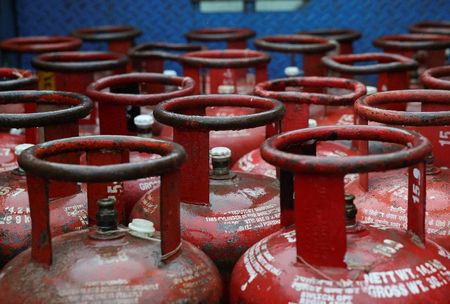
LPG cylinders are pictured inside a truck outside a gas agency, in Manesar, Haryana, India, April 7, 2026. REUTERS/Bhawika Chhabra
In India, there is a shortage of cooking gas. In California, motorists are paying $6 a gallon for gasoline. They are both symptoms of the worst-ever energy supply disruption. They are also directly connected, and evidence of the knock-on effects across the global economy of the U.S.-Israeli war with Iran.
Iran's near-closure of the Strait of Hormuz has thrown global oil trade into disarray, cutting off importers from around one-fifth of the global oil supply that traversed the waterway before the war. This has forced oil buyers to burn through stockpiles and take other emergency measures to manage global fuel shortages.
Some attempts to address the shortages, such as the Indian government's efforts to shore up liquefied petroleum gas supplies, are spreading the pain.
India, the most populous country, uses LPG as its primary cooking fuel. Cut off from Middle Eastern LPG, which represented over 90% of India's total imports of the fuel before the Iran war, New Delhi has directed refiners to maximize LPG output. To comply, refiners have cut production of alkylates - motor fuel additives made using LPG as feedstock.
For California, shrinking alkylate supply compounds concerns of a potential gasoline shortage due to declining fuel production and exports from Asian refiners struggling to access Middle Eastern crude oil. Alkylates are highly sought in California because they burn cleaner than other additives, and the state requires a unique gasoline blend to reduce smog.
That is why California's motorists face a double whammy from the war: a slump in Asian fuel exports has directly hit its motor fuel supply chain, and additives needed for the state's unique gasoline blend are harder to procure because of India's conservation of cooking fuel.
"With India's LPG supply constrained by the closure of the Strait of Hormuz, refiners there are producing and exporting less alkylate, adding pressure to an already tight California gasoline market," said Mason Hamilton, chief economist for the American Petroleum Institute industry group.
INDIA PRIORITIZES COOKING FUEL
Indian refiners' decision to cut alkylate exports could not come at a worse time for California. Motorists in the most populous U.S. state are already paying the highest gasoline prices since 2022 amid the global fuel supply crisis caused by the war, and lower alkylate supply will likely inflate prices as summer driving season boosts demand, GasBuddy analyst Patrick De Haan said.
"The more acute the alkylate supply shortfall becomes, the higher it could push prices in California," De Haan said.
A spokesperson for the California Energy Commission, a state agency, said California is aware of India's evolving priorities but has a healthy supply of gasoline and blending components. The CEC does not foresee a shortfall but is monitoring the situation, the spokesperson said.
California's average retail motor fuel price was $6.14 per gallon on Friday, after hitting an over three-year high of $6.16 on May 7 as California gasoline stockpiles hover near record lows, GasBuddy data showed. Prices could cross $6.50 over the coming weeks, De Haan said.
U.S. environmental laws require cleaner‑burning gasoline blends during the peak summer season, adding to costs. California has the strictest U.S. mandate, which increases costs relative to the rest of the country, said Kpler lead research analyst Nikhil Dubey. The U.S. national average gasoline price was $4.52 a gallon on Friday, GasBuddy data showed.
There is little India can do to continue supplying alkylates to California. The LPG shortfall there has been so severe people have queued for hours to purchase LPG cylinders, often only to be turned away and forced to buy from the black market. Restaurants and other businesses have warned they could be forced to shutter.
Reliance, operator of the world's largest refinery in Jamnagar, Gujarat, said this month it was cutting alkylate output and exports to maximize LPG production. India's total alkylate exports fell to 33,000 barrels per day in April, about half of the 61,000 bpd exported in March and the lowest since October 2023, Kpler data showed.
FEW GOOD OPTIONS
Similar to New Delhi combating LPG shortages, California Governor Gavin Newsom has few options to prevent pump prices from rising further as long as the Iran war drags on.
Any stopgap measures to lower fuel prices, such as tax waivers, would boost demand, which in turn would deepen the alkylate shortage and set up worse sticker shocks for consumers, De Haan said.
"You can't put more pressure on a system struggling under the existing weight on it," De Haan said.
For Newsom, that means his only viable option to tame California's fuel prices may be to waive the state's fuel specifications to reduce the need for alkylates, GasBuddy's De Haan said.
"His hands are tied. That's the only choice he has," De Haan said.
The CEC does not think a waiver of blending requirements would help the state, the CEC spokesperson said.
(Reporting by Shariq Khan in New York, Mohi Narayan in New Delhi, Trixie Yap in Singapore; Editing by Liz Hampton and Rod Nickel)
Recent Articles
- Elon Musk Loses Jury Trial Against OpenAI, Altman
- China's Economy Lost Steam in April as Consumption, Output Disappoint
- Nikka Bets Japanese Whisky Boom Has Room to Run
- Trump Got a Small Rare Earth Win but Failed to End China's Export Controls
- Xpeng Begins Mass Production of Robotaxis in Guangzhou
- Baidu Beats Q1 Revenue Estimates as AI Cloud Surge Offsets Ad Slump
- Musk Expects Widespread Use of Cars Without Human Monitors in 2026
- Ford to Launch Seven European Models in Bid to Fend off Chinese EVs
- How India's Cooking Fuel Shortage Is Driving up California Gas Prices
- China's Solar Panel Exports Jump 60% on Year in April