

How the Philippines Went from an Asian Economic Leader to Laggard
By H Y Nahm | 23 Jun, 2026
A nation once ranked just behind Japan in Asia squandered its many advantages through cronyism, misguided policies and a loss of trust in government.
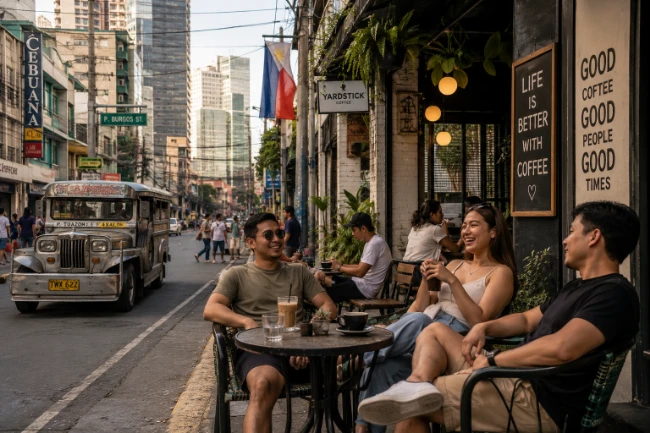
In the early 1960s, if you'd asked an economist to pick the Southeast Asian nation most likely to lead the region into prosperity, most would've pointed to the Philippines.
It had the best universities, the most American-style institutions, a large English-speaking workforce, and a GDP per capita that dwarfed its neighbors. It was second only to Japan across the entire Asia-Pacific. Vietnam was mired in war. Indonesia was politically chaotic. Malaysia was still stitching itself together as a nation. The Philippines looked like the obvious winner.
Sixty years later, the Philippines is last. Not just behind Malaysia and Indonesia, but behind Vietnam — a country that spent the 1970s and 1980s under a US trade embargo, recovering from one of the most devastating wars in modern history. In 2024, Vietnam's GDP per capita crossed $4,900, while the Philippines sat at roughly $3,985. The gap is widening. Projections through 2028 show no reversal in sight. It's one of the most remarkable economic reversals in postwar Asian history, and it didn't happen by accident.
Hijacked by Corrupt Cronyism
The decline has roots that go back to the Marcos era, but the damage can't be pinned on Ferdinand Marcos Sr. alone. It's the product of decades of bad governance, elite capture of the economy, constitutional self-sabotage, chronic underinvestment in infrastructure and education, and a political culture that has repeatedly protected the interests of a wealthy few at the expense of everyone else.
Start with the Marcos years, because they matter. From 1972 to 1986, Marcos ran the Philippines as a kleptocracy, funneling billions of dollars out of the country and into the overseas accounts and real estate holdings of his family and cronies. The foreign debt ballooned. Key industries were handed to friends of the regime as monopolies.
When Marcos fell, the country was left with an economic hangover that took most of the following decade to shake. While Malaysia and Thailand were posting roaring growth rates in the late 1980s and early 1990s — attracting factories and foreign investment that built export-driven industrial bases — the Philippines was restructuring debt and managing political instability. It never fully caught the wave.
Restrictions on Foreign Investments
But here's the part that's harder to pin on Marcos: the constitutional straitjacket his overthrow helped create. The 1987 constitution, drafted in the euphoric aftermath of the People Power Revolution, was understandably protective of Filipino sovereignty. It restricted foreign ownership of land and capped foreign equity in businesses at 40 percent. It reserved entire sectors — media, telecommunications, public utilities, natural resources — for majority-Filipino ownership. The drafters were wary of foreign domination, and given the country's colonial history, that instinct was politically understandable.
Economically, though, it's been a disaster.
While Vietnam, Indonesia, and Malaysia were throwing open their doors to foreign manufacturers and climbing the global value chain, the Philippines was constitutionally barred from offering the kind of full ownership rights that companies building factories and supply chains typically demand. Vietnam now captures 85 percent of GDP in goods exports. Malaysia and Thailand are in the 50-to-60 percent range. The Philippines manages 12 percent. When Apple, Samsung, and the rest of the electronics supply chain was looking for places to build, the Philippines was largely passed over. Vietnam got the factories. The Philippines got the call centers.
There's nothing wrong with the BPO industry — it's provided millions of jobs and the IT-business process outsourcing sector is a genuine competitive strength. But it doesn't generate the kind of technology spillovers, supply chain development, or broad-based employment that manufacturing does. A country can't industrialize on call centers and remittances alone, and the Philippines has been trying to do exactly that for two decades.
Remittance-Based Consumption Economy
The remittance economy is its own double-edged story.
Every year, millions of Filipinos leave to work in Saudi Arabia, the US, Hong Kong, and dozens of other countries, sending money home to families who spend it on consumption. In 2024, overseas remittances hit a record $38.34 billion, representing 8.7 percent of GDP. This money has been a genuine lifeline — it props up consumer spending, stabilizes the peso, and keeps poverty from being even worse than it is. But it's also a pressure-release valve that allows the political system to avoid hard choices. Rather than fixing the economy so that talented Filipinos can build careers at home, the country has grown structurally dependent on exporting its people.
Corruption isn't a subplot in this story — it's a central character. The Philippines ranked 114th out of 180 countries in Transparency International's 2024 Corruption Perceptions Index, deep in the bottom half. Infrastructure projects that should take months get mired in years of procurement scandals. Foreign investors who navigate the ownership restrictions then face a judicial system that's slow, expensive, and susceptible to political pressure.
The US State Department's own investment climate assessment lists poor infrastructure, high power costs, regulatory inconsistency, a cumbersome bureaucracy, and corruption as the main barriers to investment in the Philippines — and that list hasn't changed much in 20 years.
Public Works Corruption Scandal
The most recent example is painfully on-brand. In 2025, the Philippine economy grew just 4.4 percent — the slowest in five years — largely because of a massive public works corruption scandal that froze infrastructure spending. When the government tried to tighten validation controls on construction projects at the Department of Public Works and Highways, disbursements collapsed. Public construction contracted by more than 26 percent in a single quarter. The economy that was supposed to be converging with its neighbors instead underperformed Vietnam, which grew 7.1 percent that year, by nearly three full percentage points.
Education Crisis
There's also an education crisis that doesn't get enough attention in these discussions.
In the OECD's PISA assessments, around 80 percent of Filipino 15-year-olds fail to reach baseline proficiency in math, reading, and science — worse than Vietnam, Malaysia, and Thailand. The World Bank estimates that 91 percent of Filipino children at late primary age aren't reading proficiently. The country has a young population that should be an enormous economic asset — about half the country is under 25 — but youth unemployment is high and the skills gap is wide. You can't build a competitive manufacturing or tech sector on a foundation like that.
The tragedy is that the Philippines has genuinely tried to reform, repeatedly, and keeps running into the same walls. Every president since Marcos has promised to fix infrastructure, cut red tape, and rein in corruption. The Ramos years in the 1990s brought genuine liberalization and a brief burst of growth. The Aquino administration in the 2010s improved credit ratings and posted strong GDP numbers, averaging over 6 percent annually.
Deep Mistrust of Reform Efforts
But each reformist push has eventually stalled, either because of political opposition from entrenched elites who profit from the status quo, or because of external shocks — the Asian financial crisis, the global recession, COVID-19 — that hit the Philippines harder than neighbors with more diversified economies.
The constitution has been identified as an obstacle for thirty years. Every president since Ramos has floated the idea of amending the economic provisions to allow more foreign ownership. Every attempt has collapsed, partly because Filipinos rationally worry that any constitutional convention will be hijacked to remove presidential term limits. The reform gets held hostage by the political system's own dysfunction. And so the 60-40 rule sits in place while Vietnam and Malaysia collect the manufacturing investment that the Philippines can't.
Turnaround Scenarios
What would a turnaround actually require? Economists who study the country tend to converge on a similar list: open the constitution to allow competitive levels of foreign ownership, make a serious and sustained push against corruption rather than episodic crackdowns, invest heavily in infrastructure and basic education, and develop an industrial policy that targets the manufacturing value chains the country has been shut out of. None of these are exotic ideas. They're roughly what Vietnam, Malaysia, and Indonesia did at various points in their development arcs. The difference is that those countries had governments willing and able to execute.
The Philippines isn't a poor country in the way that Cambodia or Laos is poor. It has real assets: a highly educated diaspora, a competitive services sector, a large domestic market, beautiful geography that could support world-class tourism, and a population that's genuinely entrepreneurial. It's a middle-income country that's been stuck at the lower end of middle income for a long time, unable to make the leap that its neighbors have made.
That's what makes the story so frustrating. The Philippines didn't fail because it lacked resources or talent or opportunity. It failed because the people who ran it, decade after decade, chose policies that protected their own positions rather than the country's potential. The ledger of squandered advantages is long. Closing it will require a kind of sustained, honest political will that the Philippines hasn't yet managed to summon — but nothing in the country's history says it can't.
© 2026 by Asian Media Group Inc.
Recent Articles
- US Consumers Favor Homebuying over Renting for First Time Since 2023
- US Manufacturing Rises but Factory Employment Falls to Six-Year Low
- Meta Launches Cheaper AI Smart Glasses Starting at $299
- How the Philippines Went from an Asian Economic Leader to Laggard
- Pakistan May See Economic Dividend from Its Role As Peacekeeper
- KOSPI Plunges Nearly 10% After Regulator Warns on Leveraged ETFs
- Asian Refiners See Little Room for Iranian Oil, Leaving China as Key Buyer After US Waiver
- China Beats US with World's Fastest Non-AI Supercomputer
- Mamdani's Socialist Pull to Be Tested in Tuesday's Primaries
- Chinese Self-Driver Momenta to Launch Hong Kong IPO Next Week