

Japan's World Cup Prospects Brighter Than Their Single Group Point Might Suggest
By MK Choi | 19 Jun, 2026
In the 2-2 draw against the Netherlands, the Samurai Blue showed precisely the kind of guile and composure one usually expects only from a top European or South American team.
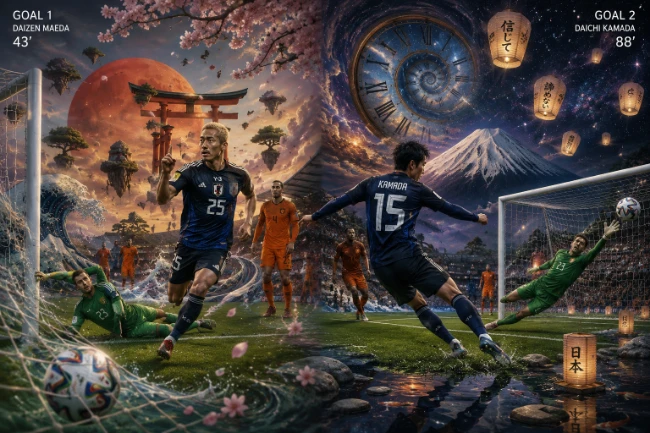
At first glance, Japan's position in the 2026 FIFA World Cup doesn't appear especially impressive. After one match, the Samurai Blue sit second in Group F with a single point, trailing Sweden's three points. To casual observers, that might suggest a team struggling to keep pace in a difficult group.
The reality is considerably more encouraging.
Japan's opening performance against the Netherlands offered strong evidence that Hajime Moriyasu's squad may be one of the most dangerous teams outside the traditional handful of World Cup favorites. Their 2-2 draw against the Dutch showcased the qualities that have steadily transformed Japan from an occasional tournament surprise into a nation expected to challenge the world's elite.
Perhaps most importantly, Japan demonstrated resilience.
The Netherlands entered the tournament carrying greater international prestige and boasting a roster filled with players from Europe's biggest clubs. Yet Japan refused to be intimidated. They fell behind twice during the match but battled back each time, eventually securing a deserved draw. Against many opponents, the Dutch would have been expected to turn those leads into victories. Instead, Japan's composure and determination kept them alive.
In tournament football, that quality often proves more valuable than dazzling skill.
World Cups are rarely won by teams that play perfectly from beginning to end. They are won by teams capable of surviving difficult moments. Japan's refusal to fold when trailing against a powerful opponent suggests a mental toughness that could become increasingly important as the competition progresses.
The draw also reinforced another trend that has become increasingly familiar over the past decade: Japan are now capable of matching elite opponents for extended stretches of play.
There was a time when Asian teams were largely judged by how long they could resist Europe's giants before eventually being overwhelmed. Japan have moved beyond that stage. Against the Netherlands, they weren't simply hanging on. They created chances, controlled possession for significant periods, and forced the Dutch to respond to their tactical approach.
That distinction matters.
Teams capable of dictating portions of a match against a traditional power are generally teams capable of advancing deep into tournaments.
Japan's technical quality remains one of their greatest strengths. The passing combinations, off-the-ball movement, and positional discipline that have become hallmarks of Japanese football were evident throughout the Dutch match. The players appeared comfortable under pressure and rarely looked overwhelmed by the occasion.
Equally encouraging was the contribution from the squad's depth.
Moriyasu has developed a reputation for getting meaningful production from players coming off the bench, and the Netherlands match provided another example. In a tournament where teams may play seven matches in a month under demanding conditions, depth often separates quarterfinalists from group-stage casualties.
The ability to introduce fresh legs without significantly lowering the team's quality can prove decisive in close contests.
Japan's strong showing becomes even more impressive when considering that influential midfielder Wataru Endo was unavailable. Endo's leadership, defensive awareness, and experience are difficult to replace. Yet Japan still managed to score twice against a respected European defense.
That suggests the team isn't overly dependent on any single player.
Of course, there are concerns.
The most obvious is defense. Japan conceded twice against the Netherlands and occasionally appeared vulnerable when the Dutch attacked quickly through the middle of the pitch. Against the tournament's most explosive offensive teams, those defensive lapses could become costly.
Still, there is a meaningful difference between surrendering two goals to the Netherlands and struggling defensively against lesser opposition. The Dutch possess elite attacking talent capable of exposing weaknesses in nearly any defense.
Japan's coaching staff will undoubtedly focus on tightening the back line, but there is little evidence that defensive issues are severe enough to undermine the team's broader potential.
The schedule also works in Japan's favor.
Their next opponent is Tunisia, a team that suffered a 5-1 defeat against Sweden in its opening match. While no World Cup game can be taken lightly, Japan will enter as clear favorites.
A victory would move Japan to four points and place them in an excellent position to qualify for the knockout stage. Depending on the result of the Netherlands-Sweden match, Japan could even find themselves leading the group heading into the final round of group play.
The final group match against Sweden would then become a contest not merely for survival, but potentially for first place.
That represents a far more optimistic scenario than many would have predicted before the tournament began.
Sweden's emphatic win over Tunisia has understandably attracted attention, but Japan's draw with the Netherlands may ultimately prove the more revealing result. Beating a struggling Tunisia side demonstrates competence. Matching a talented Dutch squad demonstrates quality.
For years, Japan have been steadily building toward the status of a nation capable of making a serious World Cup run. They reached the Round of 16 in 2022 and came within a penalty shootout of eliminating Croatia. Since then, the player pool has only grown stronger, with more Japanese players competing in Europe's top leagues than ever before.
That experience appears to be paying dividends.
This team combines technical sophistication with athleticism, tactical discipline with creativity, and confidence with humility. Those traits have made Japan a difficult opponent for every nation they've faced over the past several years.
The standings currently show only one point.
The performances tell a different story.
If Japan defeat Tunisia as expected and carry the same energy and quality they displayed against the Netherlands into the remainder of the tournament, their path to the knockout stage looks highly favorable. Once there, they become exactly the kind of organized, technically gifted, mentally resilient side that stronger nations hope to avoid.
A single point after one match may not look impressive on paper.
But anyone who watched Japan's opening performance knows the Samurai Blue appear capable of much more than their current total suggests.
© 2026 by Asian Media Group Inc.
Recent Articles
- Japan's World Cup Prospects Brighter Than Their Single Group Point Might Suggest
- International Stars in the Red Devils' Lineup Suggests a Deep World Cup Run for S. Korea
- Italy's Meloni Says Trump 'Totally Invented' Story That She Begged Him for Photo
- Lebanon Ceasefire Agreed After US-Iran Talks in Switzerland Scrapped
- Qantas Bets on Sleep and Light Science to Sell 20-Hour Flights
- High-Wire Diplomacy Delivered US-Iran Deal but the Tricky Part's to Come
- Pentagon Asks for $80 Billion for Iran War Bills
- Ukrainian Drone Makers Zero in on Demand Created by Taiwan Tensions
- Bedtime Story: Tenali Raman and the Thieves
- Fujimori Edges Toward Peruvian Presidency as Sanchez Calls for Protests