

New Hostilities Throw US-Iran Ceasefire into Doubt
By Reuters | 07 May, 2026
The two sides exchanged fire Thursday though Iran says it hasn't yet arrived at a response to the latest US proposal
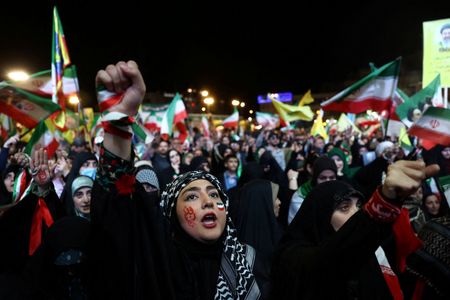
People chant during a rally in Tehran, Iran, May 6, 2026. Majid Asgaripour/WANA (West Asia News Agency) via REUTERS
The United States and Iran exchanged fire on Thursday, throwing into question the viability of a shaky ceasefire that had largely held for the previous month.
Iran's top joint military command accused the U.S. of violating the April 7 ceasefire by targeting an Iranian oil tanker and another ship entering the Strait of Hormuz chokepoint.
The U.S. military said it acted in self-defense after Iran launched "unprovoked" attacks on U.S. Navy destroyers that were passing through the strait. It said Iran did not hit any U.S. assets in the attack.
Air defenses were activated in Tehran, the semiofficial news agency Mehr reported.
CEASEFIRE UNDER PRESSURE
The renewed hostilities broke out as Washington was awaiting Iran's response to a U.S. proposal that would stop the fighting but leave the most contentious issues, such as Iran's nuclear program, unresolved for now.
Iran's foreign ministry spokesperson said Tehran had not yet reached a conclusion on the emerging plan.
The proposal does not address key U.S. demands that Iran suspend its nuclear work and reopen the Strait, which before the war handled one-fifth of the world's oil and gas supply.
The proposed framework would unfold in three stages: formally ending the war, resolving the Strait of Hormuz crisis and launching a 30-day window for negotiations on a broader agreement, according to the sources and officials.
Separately, the U.S. imposed sanctions on Thursday on Iraq's deputy oil minister and three militia leaders over what it said was their support for Iran.
Israel, which has also been fighting Iran-backed Hezbollah in Lebanon, said on Thursday it had killed a Hezbollah commander in an airstrike on Beirut a day earlier, the first Israeli attack on the Lebanese capital since a ceasefire there was agreed last month.
A halt to Israeli strikes in Lebanon is a key Iranian demand in negotiations with Washington.
(Reporting by Reuters bureaus; Writing by Lincoln Feast, Ros Russell, Andrew Heavens, David Brunnstrom and Daniel Trotta; Editing by Andy Sullivan, Kate Mayberry, William Maclean, Gareth Jones and Cynthia Osterman)
© 2026 by Asian Media Group Inc.
Recent Articles
- Qantas Bets on Sleep and Light Science to Sell 20-Hour Flights
- High-Wire Diplomacy Delivered US-Iran Deal but the Tricky Part's to Come
- Pentagon Asks for $80 Billion for Iran War Bills
- Ukrainian Drone Makers Zero in on Demand Created by Taiwan Tensions
- Bedtime Story: Tenali Raman and the Thieves
- Fujimori Edges Toward Peruvian Presidency as Sanchez Calls for Protests
- Republicans Blast Trump's Iran Agreement as Details Emerge
- SK Hynix Veteran Seok-Hee Lee Tapped to Lead Intel Foundry Packaging Push
- Mamdani Plans to Air World Cup for Free Throughout New York
- Myra Molloy Parlays Historic Broadway Success into a Leading Film Role