

Kimchi, Gochujang Catch Fire on Trendy New York City Menus
By wchung | 27 May, 2026
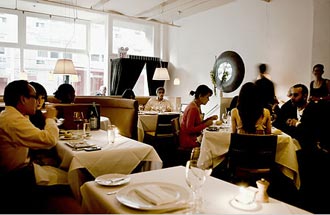
Annisa in Greenwich Village is one of a growing number of trendy NYC restaurants offering Korean flavors on their menus.
Korean cuisine has gained enough traction in New York City to pop up in surprising ways on the menus of trendy, upscale restaurants, according to Chosun Ilbo.
Dishes like bulgogi (marinaded grilled beef), galbi (marinaded grilled short ribs), bibimbap (rice with assorted vegetables) and yookhwae (beef tartare) have broken out of the confines of Koreatown to invade trendsetting eateries in hipper districts of Manhattan.
SoHo’s Mercer Kitchen has casually begun offering kimchi and mustard sauce on its Schaller & Weber hotdogs while Michael’s in Midtown West has introduced bulgogi tacos to its forward-eating clientele.
The Michelin-starred Annisa in West Village is even more daring, serving yookhwae soaked in pear juice and grilled mackerel with gochujang, a red pepper paste rarely seen outside Korean kitchen tables. The condiment has even been picked by Bon Appetit as a food trend set to take off this year.
By now kimchi has become so old hat among trendy New Yorkers that the Palace Hotel’s Gilt is using it to garnish a variety of dishes. No longer does the famous Korean pickles require even a subtitle or a parenthetical explanation on most menus.
Korean food has made the 2012 dining trends report published by New York City restaurant consultants Baum+Whiteman. It mentions kimchi, bulgogi, galbi and bibimbap as new words that have made the American lexicon.
Perhaps the most reliable gauge of the surging popularity of Korean food are its use in online searches. Searches for “kimchi” soared 96.1% this year in the US over three years ago. “Korean BBQ” jumped 75.4% and “bibimbap” skyrocketed 194.1%.
Other Korean foods hovering on the horizon for the Big Apple’s trendsetters are soondubu (soft tofu casserole), nangmyeon (spicy cold buckwheat noodles) and jhabchae (glass noodles with vegetables) — three dishes that have already appeared on the radar in Los Angeles, the nation’s leader in Korean-food adoption.
One of the factors contributing to the assimilation of Korean flavors into trendy tastebuds is the proliferation of Asian restaurateurs who have a greater comfort level with Korean food. For example, Annisa was co-founded and now solely owned by its Chinese American chef Anita Lo.
Recent Articles
- Fakes, Piracy, Exports Thrive in Vietnam Despite Looming US Tariff Threat
- Ferrari Takes Long View with Stereotype-Busting Luce EV Debut
- Chinese EV Brands Gain as Europe Car Sales Rise
- US Plans to Halt Immigration, Customs Processing at Airports of Biggest Cities
- American Airlines Plans to Double India Tech Hub Staff
- Canada to Buy Swedish Early Warning Planes in Snub to US
- Yao Ming to Become Face of NIO's Overseas Marketing Drive
- American Airlines Sees Strong Travel Demand from K-Shaped Economy Cushioning Fuel-Price Hit
- 4th-Gen Solid-State Battery Maker ProLogium to List on Nasdaq in $3.8 Billion SPAC Deal
- Global Firms Use AI at Indian Hubs to Bring Ad Creatives In-House