

Alysa Liu Overcomes Powerful Japan Squad to Capture Gold with Dazzling Free Skate
By Goldsea Staff | 20 Feb, 2026
The 20-year-old California native Chinese American is the first US woman to win figure-skating gold in 24 years.
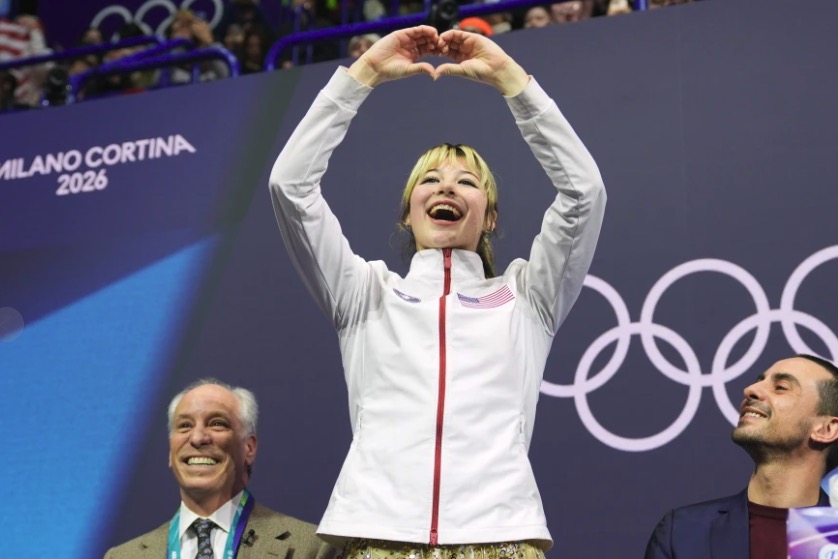
(AP Photo)
If Hollywood had scripted Thursday's women's figure skating competition at Milan Cortina, people would say it was a bit much. The American teenager who once retired from skating, came back for the love of it, then stared down the deepest Japanese women’s field in the world, managed third place in the short program—and won Olympic gold with the free skate of her life.

But that’s exactly what Alysa Liu pulled off.
Coming into the Games, the smart money was on Japan. The Japanese women have owned the technical arms race for the better part of a decade—relentless jump layouts, triple-triples like clockwork, and the kind of skating skills that make judges purr. Kaori Sakamoto brought power and polish. Wakaba Higuchi had the firepower and the competitive grit. On paper, it was Japan’s gold to lose.
Then Liu stepped onto the ice for the free skate.
From the opening pose, there was a different energy about her—calm, centered, almost playful. The music swelled and she launched into her first jumping pass, snapping off a high, clean triple-triple combination that set the tone. No hesitation. No tight landings. Just flow. Her edges carved deep, confident arcs across the ice as if she were sketching her own destiny in white.
Midway through the program came the moment that flipped the arena from anxious to electric: a soaring triple Lutz out of complex footwork, landed with a soft knee and a casual glide that said, “Yes, I meant to do that.” The crowd roared. Even the Japanese fans—who had turned the arena into a sea of red and white—couldn’t help but applaud.
Technically, it was airtight.
Every jump rotated cleanly. Combinations were tacked on with surgical precision. But what separated Liu from the field wasn’t just the base value—it was the performance. Her choreography breathed. She hit musical accents with crisp spins that accelerated like turbines, then melted into expressive step sequences that showed how much she’d matured since her prodigy days.
This wasn’t the jump-happy kid we first met years ago. This was a skater who had stepped away, rediscovered joy, and returned with perspective. You could see it in the way she smiled mid-program—not a forced grin, but a genuine flash of delight. She wasn’t skating not to lose. She was skating to give something.
When Sakamoto took the ice later, she delivered a strong, powerful skate—speed, height, conviction. Higuchi followed with her trademark attack. But small wobbles and slightly under-rotated landings opened the door. In a sport where tenths matter, Liu had left no daylight.
The final scores took their time. The arena buzzed. Liu stood at the boards, hands clasped, eyes wide but steady. When her numbers finally flashed—vaulting her into first place overall—the sound inside the building turned into a wall of noise. She covered her mouth, then burst into tears.
Gold.
In that moment, it wasn’t just a victory over a stacked Japanese squad. It was a triumph over expectations, over burnout, over the narrative that prodigies flame out early. Alysa Liu didn’t just win with jumps. She won with heart, with composure, and with a free skate that felt like freedom itself.
And against one of the most powerful national contingents in figure skating history, that made the gold shine even brighter.
© 2026 by Asian Media Group Inc.
Recent Articles
- Only 11% of Europeans View US as Ally, Survey Shows
- BYD Will Be World's Biggest Automaker in 5 Years Says Its Chairman
- US Consumer Prices Increase at Fastest Pace in 3 Years
- Traders Keep Bets on Fed Rate Hike by October
- Drone Risks Keep World Cup Security Planners Frantic
- Bill Gates to Face Congress in Probe of Epstein Case Handling
- Musk’s xAI, SpaceX Hit with Class Action over Data Center ‘Nuisance’
- Downed Chopper Prompts US to Launch New Strikes on Iran
- China's May Producer Prices Highest in Nearly 4 Years
- Samsung Invests $175 Million to Become Top Shareholder in US Genetics Firm