

HealthSay Yes to NO for Better Blood Flow and Stronger Arteries
By Goldsea Staff | 27 Feb, 2026
Supplement your nitric oxide levels production to improve your energy levels and cardiovascular health
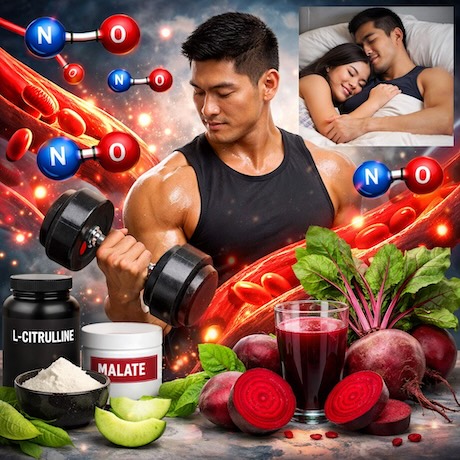
If you're looking for a smart, science-backed way to boost your vitality and keep your arteries supple as you age, meet nitric oxide — abbreviated as NO. It's one of the most powerful signaling compounds your body makes.
The good news is that you can actually do something to boost it.
What Is Nitric Oxide?
Nitric oxide isn't something you take directly. It's a tiny gas molecule that your blood vessel walls generate, and its main job is to tell those vessels to relax and widen. That process is called vasodilation, and it's a big deal for your health. When your blood vessels are more relaxed and open, blood flows more freely, your heart doesn't have to work as hard, blood pressure tends to come down, and your muscles and organs get more of the oxygen and nutrients they need.
Think of your arteries like a garden hose. When the hose is pinched or stiff, the water pressure builds up and the flow gets restricted. Nitric oxide is essentially your body's way of opening up that hose. The wider and more flexible your blood vessels, the better everything functions — from your energy levels to your brain performance to your cardiovascular health.
Here's the catch, though: your body's ability to produce nitric oxide declines with age. By the time you're in your 60s, you're likely producing significantly less NO than you did in your 30s. That decline is linked to reduced exercise capacity, higher blood pressure, stiffer arteries, and lower energy. It's not inevitable, but it does mean you've got to be a bit more intentional about supporting your NO levels.
Two Pathways to More Nitric Oxide
Your body has two main ways to produce nitric oxide, and they work through completely different mechanisms. Understanding both helps you make smarter choices about how to support them.
The first is called the enzymatic pathway. Your blood vessel cells contain an enzyme called eNOS (endothelial nitric oxide synthase) that converts an amino acid called L-arginine into nitric oxide. The problem is that as you age, this enzyme becomes less efficient. That's why L-arginine supplements — which were once the go-to for NO support — aren't as effective for older adults as they used to be. Your body just can't use them as well.
The second pathway is the dietary nitrate pathway. When you eat foods high in nitrates — like beets, spinach, arugula, and other leafy greens — your body converts those nitrates into nitrite, and then into nitric oxide. This pathway doesn't rely on eNOS efficiency, which means it actually holds up better as you get older. It's one of the reasons beet-based supplements and nitrate-rich diets have gotten so much attention in cardiovascular research.
The Smart Supplement Stack
So what should you actually take? Here's where it gets interesting, because you've got a few solid options that work through complementary mechanisms.
L-Citrulline Malate is arguably the gold standard for NO supplementation right now. L-citrulline is an amino acid that your body converts into L-arginine more efficiently than taking L-arginine directly — and importantly, it does so inside the kidneys before it ever reaches the bloodstream, bypassing some of the digestive issues that make straight L-arginine hard to tolerate. Doses of around 3 to 6 grams per day are well-studied, and if you're taking it for exercise performance, about 30 to 60 minutes before a workout is the sweet spot.
The malate part — malic acid — is what makes the combination particularly smart. Malate is a key player in your cells' energy production cycle. It helps clear out metabolic waste products like lactic acid and ammonia from your muscles, which means less soreness, less fatigue, and better endurance. The two compounds together hit both the blood flow side and the energy production side of the equation, which is why citrulline malate became such a staple in sports nutrition.
Dietary nitrate sources like beet juice or fermented beet supplements approach NO production from the other direction. Rather than feeding the enzymatic pathway, they work through the dietary nitrate pathway. A small glass of beet juice (around 500mg of nitrates) daily has been shown in multiple studies to support healthy blood pressure and improve exercise tolerance in older adults. Some people find it convenient to get this through a concentrated supplement rather than drinking beet juice every morning, and that's perfectly reasonable.
What to Watch Out For
If you're a generally healthy person, NO boosters are well-tolerated for most people. But there are a few things worth knowing before you start.
If you're on blood pressure medications, check with your doctor first. NO boosters can amplify the blood pressure-lowering effect, which could take things too low. The same goes if you're taking any medications that work on the nitric oxide pathway, like sildenafil (Viagra) or nitroglycerin — combining them can cause a significant and potentially dangerous drop in blood pressure.
Some people experience mild headaches when they first start taking NO supplements, especially from beet-based sources. That's the vasodilation effect at work, and it usually settles down after a few days as your body adjusts. L-arginine at higher doses can also cause GI discomfort, which is another reason citrulline is the preferred option for most people.
Start low, especially if you're 60 or older, and give your body a couple of weeks to adjust before assessing whether it's working for you.
The Bigger Picture
Nitric oxide isn't a magic pill, but it's one of those areas where the science is genuinely solid and the practical benefits are real. Better blood flow means better everything — more energy, more endurance, healthier arteries, and a cardiovascular system that's working the way it's supposed to. At a time in life when those things can start to slip, having a straightforward and well-researched way to support them is worth taking seriously.
Don't overlook the dietary side either. Eating more leafy greens and beets, staying hydrated, getting regular aerobic exercise, and not smoking are all powerful ways to keep your NO levels up naturally. Supplements can fill in the gaps, but they work best alongside a lifestyle that already supports good vascular health.
Say yes to NO — your arteries will thank you for it.
Recent Articles
- How AI Is Accelerating Anti-Aging Research and Therapy Approval
- Asia Factory Output Expands as Firms Stockpile Buffers over Iran War Risks
- Masayoshi Son's SoftBank Passes Toyota to Become Japan's Most Valuable Firm
- Japan Seeks World Cup Breakthrough After High-Profile Wins
- Changpeng Zhao's Binance Expands into US Stocks, ETFs
- India's Viral 'Cockroach' Youth Group Plans Street Protest in Challenge to Modi
- Nvidia Launches New AI Chip for Personal Computers
- AI Optimism Counters US-Iran War As Wall Street Opens Near Record Highs
- US Manufacturing Activity Hits Four-Year High in May
- Honeywell's Quantinuum Eyes $14.3 Billion Valuation in Upsized US IPO